Antimicrobial resistance
Vaccines can have a vital role in the fight against antimicrobial resistance. If you can stop people from catching infections, you can reduce the number of antibiotics being used. And the less antibiotics are used, the lower the chance of resistance developing.
When enough people are vaccinated, it’s possible to stop the spread of infection – so-called ‘herd immunity’.
Making the most of the vaccines we have and ensuring as many people as possible are vaccinated is vital.
- The Hib vaccine has virtually eliminated infection caused by resistant influenzae type b.12
- Diphtheria and pertussis do not appear on lists of resistant diseases of public health concern because they are almost entirely preventable by vaccination.13
- Universal coverage of pneumococcal vaccination could avoid 11.4 million days of antibiotic use per year in children under five.12
- Antibiotic use for respiratory illnesses has been shown to fall by 64% after influenza vaccination is introduced.14
Pharmaceutical companies are constantly researching new vaccines to protect against other infections.
The UK Government has an opportunity to make sure vaccines are deployed effectively as part of their prevention strategy.
Reducing demand on the NHS
Flu vaccination is one of the most effective interventions to keep people well and reduce pressure on health and social care services during winter. Immunising older people reduces the incidence of severe disease including bronchopneumonia, hospital admissions and mortality.15
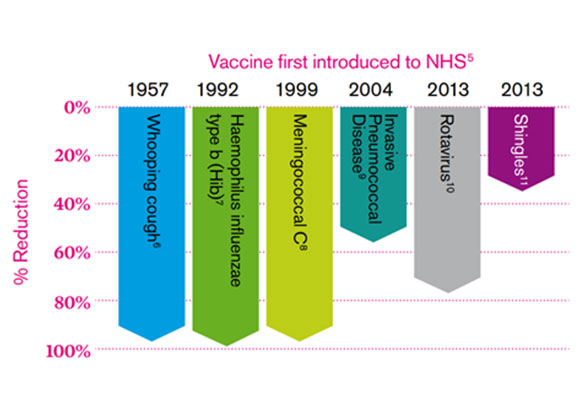
Before the introduction of a vaccination programme, Rotavirus infection in the under 5s was responsible for around 140,000 young children visiting the GP and 14,000 babies and young children being admitted to hospital every year, as well as 37,000 NHS Direct calls and 30,000 A&E attendances.3
Vaccination has led to a 69% fall in the number of cases of rotavirus.3