
About this report
Innovative medicines are fundamental to delivering the ambitions of Scotland’s health and care system. Alongside prevention, early diagnosis and service transformation, they can help people to live longer, healthier and more independent lives while helping the National Health Service (NHS) make best use of finite resources. Effective medicines can slow disease progression, avoid unnecessary hospital admissions and shorten inpatient stays, supporting the shift towards prevention and care closer to home.
Realising these benefits depends not only on robust health technology assessment (HTA), but on timely and consistent implementation across Scotland to improve patient outcomes, reduce unwarranted variation and support a more sustainable NHS. National guidance expects boards to reach a formulary decision within 90 days and publish it within 14 days,1 but implementation can take much longer. Scotland already has mechanisms to support implementation, including United Kingdom (UK) PharmaScan, the SMC Forward Look, the Horizon Scanning Advisory Board (HSAB) and emerging regional formulary arrangements. The opportunity is to connect these more consistently so that workforce, diagnostic, pathway and resource requirements are considered earlier and barriers identified before medicines enter routine use.
This report, from the Association of the British Pharmaceutical Industry (ABPI), supported by LCP Health, examines adoption of selected SMC-accepted medicine classes across territorial NHS boards between 2020 and 2025. It identifies substantial variation in the pace and scale of recorded prescribing. For the type 2 diabetes and weight-management medicine class, prescribing activity in the highest-prescribing board was approximately ten times that of the lowest at the end of the analysis period. For non-statin LDL-lowering therapies, it varied by around eight- to ten-fold. Other classes varied to differing degrees.
While prescribing activity is not a direct measure of patient access, and some variation may reflect differences in population characteristics, service models or the location of specialist care, these findings illustrate that the opportunity for clinically eligible patients to benefit from SMC-accepted medicines may not be experienced consistently across Scotland. Where such variation reflects avoidable implementation barriers rather than differences in clinical need, patients in some areas may wait longer than others to access medicines already assessed as clinically effective and cost-effective. Delays in local implementation can postpone patient benefit and diminish the health, service and economic value that these medicines are intended to deliver.
The report is intended to support NHS Scotland leaders and the Scottish Government in strengthening implementation, while also informing clinicians, patients, academia and industry who contribute to delivery. It does not rank NHS boards, but identifies where implementation appears to work well, where barriers remain and what can be learned from stronger adoption.
Partnership working between the Scottish Government, NHS boards, clinicians, patients, academia and industry will be essential to implementing the recommendations. The refreshed ‘Common Understanding’ 2 and the triple helix approach provide a framework for transparent, appropriate collaboration while preserving the independence of appraisal and clinical decision-making. Industry can be an effective partner on horizon scanning, service planning and evidence generation, helping to reduce avoidable variation, support timely, equitable access for clinically eligible patients and help Scotland realise the wider value of innovative medicines.
Executive summary
Scotland has a strong national process for assessing new medicines through the SMC, which provides a national assessment of clinical effectiveness and cost-effectiveness. However, less is known about how consistently accepted medicines are subsequently adopted across NHS Scotland. This report was undertaken to examine that implementation gap: where adoption differs between NHS boards, what those patterns might indicate about local readiness and what could help translate national decisions into more consistent patient benefit.
This report presents the first multi-therapy analysis of prescribing activity over time following selected SMC acceptance decisions across all territorial NHS boards in Scotland. The analysis examined routinely collected community and hospital prescribing data across all territorial NHS boards between September 2020 and August 2025. It covered medicines for type 2 diabetes and weight management, low-density lipoprotein (LDL) lowering, non-small cell lung cancer, migraine prevention and an orphan medicine for the treatment of obstructive hypertrophic cardiomyopathy (oHCM). These classes span broad primary-care use through to highly specialised pathways requiring specialist initiation, monitoring and genomic testing.
Across the medicine classes, there was substantial variation in the pace and scale of recorded prescribing between NHS boards. The variation was most pronounced where adoption depended on specialist diagnostics, genomic testing, workforce capacity, monitoring or complex referral arrangements. Available measures of population need did not fully explain the patterns observed, while some NHS boards achieved relatively strong adoption despite geographical or service-delivery challenges. One of the clearest examples was the type 2 diabetes and weight-management medicine class, for which population-standardised prescribing quantity increased by approximately 430 per cent over the analysis period. However, the prescribing rate in the highest-prescribing NHS board was approximately 10 times that in the lowest-prescribing board, and this variation was not fully explained by differences in underlying disease prevalence. Together, these findings suggest that local implementation arrangements and service readiness can materially shape how quickly SMC-accepted medicines become established in routine care.
Key implications of our analysis:
SMC acceptance is the start of the patient-access pathway, not its endpoint. Timely implementation also depends on formulary inclusion, pathway design, diagnostic provision, workforce capacity, monitoring arrangements and clear referral pathways.
▸ Variation in recorded prescribing activity cannot be explained by population need alone. The observed patterns were consistent with differences in local implementation arrangements and service readiness, but further work is required to understand the causes and whether variation represents unmet need or appropriate clinical practice.
▸ Specialised and precision medicines require patient-centred monitoring. For regional services, prescribing location may reflect where treatment is delivered rather than where patients live. Monitoring should therefore distinguish, where possible, between provider-board activity and access for residents of each NHS board.
▸ Greater transparency should support accountability and shared learning. More consistent reporting of formulary inclusion, implementation milestones, service readiness and adoption could help identify barriers and gaps, thereby strengthening accountability and enabling the sharing of best practice.
▸ Earlier planning can reduce avoidable implementation delays. Building diagnostic, workforce, infrastructure and pathway requirements into horizon-scanning and pre-SMC planning would better prepare NHS Scotland for innovative medicines with complex delivery requirements.
The implications are therefore broader than formulary inclusion alone. Delays in establishing diagnostics, specialist capacity, referral pathways, prescribing arrangements or funding can delay the point at which patients benefit from clinically and cost-effective medicines. The observed variation should not be interpreted as a ranking of NHS boards, but as a signal for further investigation and shared learning: where adoption has progressed more quickly, understanding and replicating the practical enablers could support better patient outcomes and more efficient use of NHS resources.
The report recommends a more coordinated approach to implementation across NHS Scotland. Seven priority recommendations are identified, as set out below.
NHS Scotland leaders and the Scottish Government should lead the work of implementing these recommendations with NHS boards and other partners, using the refreshed ‘Common Understanding’ and the triple helix approach to enable appropriate collaboration with industry on areas such as horizon scanning, service planning and evidence generation.2 Doing so will result in improved patient outcomes through more timely and consistent adoption, reduced avoidable variation, and greater realisation of the wider value of innovation across NHS Scotland.
Opportunities to strengthen the implementation of SMC-accepted medicines in Scotland: summary of recommendations
The findings indicate that variation in adoption is influenced not only by population need, but also by differences in service readiness, formulary inclusion, diagnostic capacity and referral pathways. Scotland already has important policy mechanisms and examples of effective implementation on which to build. The following recommendations focus on connecting these more effectively, clarifying responsibility for implementation and supporting earlier action so that SMC acceptance translates more consistently into patient benefit.
1. Enhance horizon scanning to support service readiness
Lead organisation(s): NHS Scotland Board Chief Executive Group
Key partners: Scottish Government, Horizon Scanning Advisory Board (HSAB), SMC, NHS boards and industry
Establish a nationally coordinated medicines implementation-readiness process so that horizon-scanning information is shared consistently and acted on before SMC advice is published. Building on UK PharmaScan, the SMC Forward Look and the HSAB, information should include anticipated clinical, workforce, diagnostic, infrastructure, pathway and financial implications. It should be shared with the relevant service-planning leads within each NHS board, including clinical, pharmacy, diagnostic, workforce and finance leads, as appropriate to the medicine and disease area. For medicines with significant implementation requirements, horizon-scanning outputs should trigger a standardised readiness assessment involving NHS boards, national clinical leads and other relevant stakeholders.
Intended outcome: Earlier service readiness, reduced delays between SMC acceptance and patient access, and more equitable adoption of innovative medicines across NHS Scotland.
2. Increase transparency of implementation and adoption
Lead organisation(s): Scottish Government
Key partners: NHS boards, East and West Planning Groups and regional formulary committees
Increase transparency around formulary inclusion, implementation milestones and prescribing adoption to support accountability, benchmarking and shared learning. In line with ‘CEL 17’ and subsequent national guidance, all NHS boards should publish up-to-date formulary lists on their websites, including decisions on SMC-accepted medicines and, where relevant, implementation status and anticipated timelines.1,3 Existing prescribing datasets could also be combined with information on local formulary decisions and service readiness to provide a clearer picture of how accepted medicines are being implemented across NHS boards. This information should be used to identify opportunities for improvement rather than to rank individual boards. Regional formulary arrangements also provide an opportunity to improve consistency, reduce duplication and share effective approaches across NHS boards.
Intended outcome: Greater transparency, earlier identification of implementation gaps and more effective sharing of good practice.
3. Introduce proportionate implementation assurance for complex medicines
Lead organisation(s): NHS Scotland Board Chief Executive Group
Key partners: NHS boards, East and West Planning Groups, regional clinical networks and relevant diagnostic services
Introduce a proportionate implementation assurance process for medicines with substantial pathway, workforce, diagnostic, infrastructure or cross-board implications, led by NHS Scotland. This would not replace local clinical decision-making or formulary governance but would support NHS boards and regional networks to document expected implementation requirements, identify barriers early and monitor progress after SMC advice. For selected medicines, this could include anticipated formulary inclusion dates, referral pathways, diagnostic and monitoring requirements, workforce plans and cross-board delivery arrangements.
Intended outcome: More structured preparation for complex medicines, earlier identification of barriers and more consistent implementation across Scotland.
4. Establish a learning system for disruptive medicines
Lead organisation(s): NHS Scotland Board Chief Executive Group
Key partners: HSAB, Scottish Government, Public Services Delivery Scotland, NHS boards and relevant national clinical and diagnostic leads
Evaluate via NHS Scotland whether early planning through the HSAB leads to more timely and consistent implementation following SMC acceptance. This process should include monitoring adoption alongside service readiness, pathway development, workforce and diagnostic capacity, and referral arrangements. Comparing planned requirements with subsequent implementation would help identify which approaches are effective, refine future horizon-scanning and service-planning activity, and share learning across NHS Scotland.
Intended outcome: Greater understanding of which early-planning interventions accelerate adoption, enabling continuous improvement in Scotland’s medicines implementation pathway.
5. Monitor specialised medicines by patient residence as well as treatment location
Lead organisation(s): Scottish Government
Key partners: Public Health Scotland, Public Services Delivery Scotland, NHS boards and relevant regional specialist networks
Avoid using prescribing activity recorded in the provider board as a proxy for access among residents of that board when monitoring adoption of medicines delivered through regional or tertiary specialist services. Where feasible, monitoring by NHS Scotland should distinguish between the patient’s NHS board of residence and the NHS board providing treatment. This would support a more meaningful assessment of geographical equity, including for cancer medicines, rare diseases and genomically targeted therapies.
Intended outcome: Better understanding for NHS Scotland and the Scottish Government of whether patients can access specialised medicines consistently regardless of where they live.
6. Embed collaborative implementation across the medicine pathway
Lead organisation(s): Scottish Government and NHS Scotland
Key partners: NHS boards, industry, academia, clinicians and patients
Utilise the refreshed ‘Common Understanding’ and the triple helix approach to strengthen collaboration from horizon scanning through to implementation and evaluation.2 Partners should work together earlier and more consistently to support service planning, pathway redesign, professional education and evidence generation, while maintaining the independence of appraisal and clinical decision-making. Through these frameworks, industry can act as an effective implementation partner.
The quantitative findings presented in this report should be complemented by practical implementation learning. NHS Scotland, industry, clinicians and patient organisations should work together to identify and share examples of successful adoption, including the service redesign, workforce planning, partnership approaches and pathway development that enabled implementation. This would support wider replication of effective practice across Scotland.
Intended outcome: Better coordinated implementation, wider adoption of effective practice and more timely and equitable access to innovative medicines.
7. Ensure funding arrangements support timely adoption
Lead organisation(s): Scottish Government
Key partners: NHS Scotland, NHS boards, NHS Scotland Board Chief Executive Group and NHS finance and service-planning leads
Pilot a targeted, protected funding approach for a limited number of high-impact SMC-accepted medicines where local affordability pressures could delay adoption. The pilot should assess whether dedicated implementation funding accelerates formulary inclusion and adoption, reduces geographical variation and supports earlier patient and system benefits.
Although SMC acceptance establishes that a medicine is clinically effective and cost-effective for NHS Scotland, implementation may still be affected by local financial pressures, particularly where adoption requires significant upfront expenditure or investment in workforce, diagnostics, monitoring or service redesign. Existing guidance expects NHS boards to fund SMC-accepted medicines from general revenue allocations and to consider resource and service implications when making formulary decisions.1,3
Intended outcome: Reduced affordability-related implementation delays, more equitable adoption and earlier realisation of patient and system benefits from SMC-accepted medicines.
Introduction
The SMC plays a central role in supporting access to new medicines within NHS Scotland. Following marketing authorisation by the Medicines and Healthcare products Regulatory Agency (MHRA), the SMC assesses the clinical and cost-effectiveness of newly licensed medicines and issues national advice on their use within NHS Scotland. Where a medicine is accepted by the SMC, Scottish Government policy expects NHS boards to make it available within 90 days of published advice, unless an equivalent medicine is already available for the same indication. While this provides a nationally consistent approach to health technology assessment (HTA), implementation of SMC advice is undertaken locally by individual NHS boards.
While SMC recommendations are made at a national level, there has been limited published evidence examining how consistently accepted medicines are implemented and utilised across NHS Scotland. This report seeks to address that evidence gap by providing a systematic assessment of adoption across multiple medicine classes and NHS boards.
The pathway from national acceptance to routine clinical use is influenced by a range of local factors. These include formulary implementation, clinical pathway development, workforce and diagnostic capacity, service readiness and the availability of specialist services. Consequently, while SMC acceptance provides a consistent national decision on the value of a medicine, the pace and extent of adoption may vary between NHS boards.
Understanding this variation is important. Although prescribing data cannot directly measure whether every eligible patient receives treatment, whether treatment is clinically appropriate or whether patients experience improved outcomes, they provide an indicator of prescribing activity and implementation into routine clinical practice. Examining prescribing patterns across Scotland can therefore help identify variation in implementation, highlight examples of effective practice and generate insights into the factors that support timely adoption of innovative medicines.
This report presents the first multi-therapy analysis of the adoption of selected SMC-accepted medicines across all territorial NHS boards in Scotland using routinely collected prescribing and utilisation data. It examines how adoption has evolved following SMC acceptance, explores variation between NHS boards and considers the service, pathway and implementation factors that may contribute to the patterns observed. The intention is not to assess or rank NHS board performance, but to identify opportunities for shared learning and to support more consistent implementation of innovative medicines in Scotland.
Methodology
The analysis examined adoption of a defined list of SMC-accepted medicines across Scotland using routinely captured prescribing and utilisation data from September 2020 to August 2025.4,5 Medicines were grouped into clinically and therapeutically relevant medicine classes to enable comparison of prescribing patterns while maintaining individual brand anonymity (Table 1). Most medicine classes comprised two active substances, except for the orphan medicine class, which comprised one active substance. The scope of the analysis covered both community and secondary care prescribing settings, to allow assessment of medicine adoption across care settings and over time. The analysis period began during the COVID-19 pandemic, and early adoption trends should therefore be considered in the context of disruption to routine services, implementation capacity and patient pathways during this period.
Prescribing quantities dispensed in both primary and secondary care settings were derived from Public Health Scotland community prescribing datasets and the Hospital Medicines Utilisation Database (HMUD).4,5 Prescribing quantities were expressed per 100,000 GP-registered population for non-orphan medicine classes and as quantities per 2,000 GP-registered population for orphan medicine classes to present rare-event variation more clearly.6 Analyses were conducted at the national level, to show overall adoption trends across Scotland, and at the NHS board level, to show regional variation.
Prescribing activity was measured using the quantity field available in the underlying community prescribing and hospital medicines utilisation datasets. This reflects the volume supplied or dispensed, rather than the number of patients treated, treatment initiations, treatment courses, doses administered, adherence or clinical benefit. Quantities may not be directly comparable between medicines with different formulations, pack sizes, dosing schedules or routes of administration. Results should therefore be interpreted primarily as trends in prescribing activity within each medicine class over time and across NHS boards, rather than estimates of the number of patients treated or direct comparisons of treatment intensity between medicine classes.
Additional analyses explored how prescribing within the type 2 diabetes and weight management medicine class varied with disease prevalence and deprivation level. Disease prevalence estimates were taken from the Scottish Health Survey and the Scottish Diabetes Survey, while deprivation analyses were based on the Scottish Index of Multiple Deprivation (SIMD).7–9 Prevalence comparisons are indicative only, as prescribing reflects multiple indications and the prevalence measures are derived from different underlying populations and data sources.
This methodological approach provides a consistent and transparent framework for assessing the adoption of SMC-accepted medicines across prescribing settings, geographies and time.
Table 1: Medicine classes and post-SMC acceptance comparison time points
Medicine class* | SMC acceptance date | Comparator date 1 | Comparator date 2 | Comparator date 3 |
|---|---|---|---|---|
Type 2 diabetes and weight management (GLP-1 receptor agonist / GIP/GLP-1 dual receptor agonist) | June 2024 | +3 months | +6 months | +12 months |
LDL-lowering (non-statin) | October 2021 | +3 months | +12 months | +36 months |
Non-small cell lung cancer (ALK inhibitors) | March 2022 | +3 months | +12 months | +36 months |
Migraine prevention (CGRP pathway attenuator) | February 2023 | +3 months | +12 months | +24 months |
Orphan medicine (cardiac myosin inhibitor) | April 2024 | +3 months | +6 months | +15 months |
*Note: Medicine classes may include more than one active substance and indication, each with separate SMC acceptance dates. The reference date represents the selected most recent relevant SMC acceptance used for the comparative analysis. It should not be interpreted as the first date on which every medicine within the class became available in NHS Scotland.
Data quality and limitations
The HMUD captures medicines issued from NHS Scotland hospital pharmacies and provides a useful measure of hospital medicines utilisation. However, the HMUD does not contain patient-level information and records medicines supplied or issued within hospital systems rather than confirmed administration to individual patients. Differences in local hospital pharmacy recording practices, stock management, returns to pharmacy and reporting completeness may affect comparability across NHS boards, particularly for medicines used in low volumes or delivered through specialist services.
Public Health Scotland community prescribing datasets capture NHS prescriptions dispensed in the community, including those issued by GPs and hospital prescriptions dispensed through community pharmacies. These data provide broad coverage of community prescribing activity but do not contain patient-level information on diagnoses, treatment adherence or clinical outcomes.
Together, the HMUD and Public Health Scotland community prescribing datasets provide substantial coverage of NHS prescribing activity across primary, community and secondary care settings in Scotland. They do not include prescribing undertaken outside NHS Scotland, such as in private healthcare settings. For medicine classes where private prescribing, self-purchase, or homecare supply is relevant, total utilisation may therefore be underestimated.
Both datasets are aggregate sources and do not include individual-level prescribing, diagnosis, indication, eligibility, treatment initiation date, persistence, adherence, or clinical outcome information. As a result, it is not possible to determine whether prescribing was for a specific licensed indication, whether individuals receiving treatment met eligibility criteria or whether medicines were taken as directed. The findings should therefore be interpreted as measures of prescribing activity and utilisation, providing an indirect indicator of access rather than a direct measure of access among eligible patients. Where medicines have multiple indications, prescribing has been analysed at active chemical or medicine-class level and therefore reflects total utilisation across all indications.
Prescribing rates were standardised using GP-registered population denominators to support comparison across NHS boards and over time. These rates should be interpreted as population-standardised prescribing activity rather than direct measures of access among eligible patients. Differences in underlying disease prevalence, case mix, service configuration, specialist referral pathways and the location of prescribing services may all influence observed variation between NHS boards. This is particularly important for specialist medicines, where prescribing may be recorded in the NHS board delivering care rather than in the NHS board where the patient resides.
The analytical period covered by this report includes the COVID-19 pandemic, which caused significant and prolonged disruption to NHS services across Scotland. The pandemic is likely to have influenced the adoption of new medicines, particularly during the early part of the study period, as NHS boards balanced the implementation of new treatments alongside the pressures of responding to COVID-19 and recovering routine services.
The data do not provide a complete measure of local implementation. They cannot identify the date of formulary inclusion, the availability of a clinical pathway, referral timelines, diagnostic turnaround times, workforce capacity, the number of eligible patients or treatment outcomes. Consequently, observed differences in prescribing activity should be treated as signals for further investigation rather than as direct evidence of differences in NHS board performance or patient access.
Findings by medicine class
1. Type 2 diabetes and weight management (GLP-1 receptor agonist / GIP/GLP-1 dual receptor agonist)
The combined burden of type 2 diabetes, overweight and obesity represents a substantial and growing public health challenge in Scotland. In 2024, approximately 5.9 per cent of the Scottish population had diagnosed type 2 diabetes, accounting for 88.2 per cent of all diagnosed diabetes, while 31 per cent of adults were living with obesity.8,9 Furthermore, approximately 87 per cent of adults with type 2 diabetes in Scotland are living with overweight or obesity.9 Both conditions are more common in deprived populations. In 2024, age-standardised obesity prevalence ranged from 24 per cent in the least deprived quintile to 36 per cent in each of the two most deprived quintiles.8 For type 2 diabetes specifically, Scottish Government monitoring reported a three-percentage-point difference in prevalence between the most and least deprived quintiles.10 Both conditions are strongly interrelated, and weight management is an important component of preventing and managing type 2 diabetes.
The type 2 diabetes and weight management medicine class includes medicines that are glucagon-like peptide-1 (GLP-1) receptor agonists and dual glucose-dependent insulinotropic polypeptide (GIP)/GLP-1 receptor agonists. These medicines are accepted by the SMC for inadequately controlled type 2 diabetes and for weight management in eligible adults.11–14
The two indications have followed markedly different implementation pathways in Scotland. GLP-1 receptor agonists are established within NHS care for type 2 diabetes, with national prescribing guidance supporting their use in appropriate patients.15 For obesity, the SMC has accepted GLP-1 and GIP/GLP-1 therapies for restricted use, but implementation has followed a nationally agreed phased approach. The NHS Scotland consensus initially prioritised people with a BMI of at least 38 kg per metre squared and at least one weight-related comorbidity, reflecting the need to manage service capacity and establish appropriate treatment pathways.16
This distinction is central to interpreting the analysis. The data used here measure NHS prescribing activity across the combined medicine class and do not identify the indication for which an individual medicine was prescribed in this aggregate analysis.4,5 They therefore cannot distinguish prescribing for type 2 diabetes from prescribing for weight management, and private prescribing is not captured. This is particularly important because obesity-specific NHS implementation has remained substantially more limited than use for type 2 diabetes. Among Scottish respondents who reported using weight-loss medication in the previous 12 months, 71 per cent reported obtaining it privately, while an estimated 85 per cent of UK patients receiving weight-management medicines were paying for treatment privately.17,18 Given the established NHS role of these medicines in type 2 diabetes, the phased and restricted NHS implementation for obesity, and the substantial private route for weight-management treatment, the NHS prescribing data analysed here is therefore likely to reflect predominantly prescribing for type 2 diabetes.
There are, however, emerging examples of NHS implementation for obesity. NHS Lanarkshire has established a defined pathway for the initiation of medicines within this class through its specialist weight management service.19 NHS Lothian has also developed a proposal for an obesity medicines specialist pathway, initially covering a small urgent-care pilot and the first two priority cohorts, comprising 517 people, with evaluation and potential expansion planned.20 These developments demonstrate progress in translating national policy into delivery, while also illustrating that obesity-specific implementation remains incremental and substantially narrower than established use for type 2 diabetes.
Feedback from ABPI member companies suggests that adoption of GLP-1 and GIP/GLP-1 therapies for both type 2 diabetes and obesity indications has varied across NHS boards in Scotland, with formulary delays in some areas exceeding one year following SMC acceptance and differences in local pathways contributing to inequitable access. Company feedback also indicates that some GPs are reluctant to initiate injectable therapies without locally commissioned services or reimbursement arrangements. For the obesity indication, although SMC acceptance was published in June 2024 alongside national consensus guidance, only a small number of NHS boards have implemented formulary approval with defined patient pathways, often for more restricted populations than outlined in the consensus.
Against this backdrop, total NHS prescribing within the combined medicine class increased by approximately 430 per cent over the analysis period, from around 50 per 100,000 GP-registered population in September 2020 to more than 265 per 100,000 GP-registered population by August 2025 (Figure 1A). Prescribing initially increased to approximately 125 per 100,000 by the end of 2022, before declining and stabilising through to mid-2024 and then rising rapidly following the most recent SMC acceptance used as the reference point for this medicine class. These rates represent all NHS prescribing across the medicines and indications included in the class and should not be interpreted as the effect of the most recently accepted medicine alone or as evidence of widespread NHS adoption for obesity.
Per-capita prescribing varied markedly across NHS boards. The Western Isles recorded the highest three-month average population-standardised prescribing activity at the end of the study period, at around 10 times the rate observed in Shetland (Figure 1B; Table 2). This comparison should be interpreted cautiously because the small populations of island boards mean that relatively small changes in absolute quantities can produce large per-capita movements.
Available prevalence measures did not fully explain this variation (Figures 1C–D). The Western Isles and Greater Glasgow and Clyde recorded the highest prescribing rates despite differing substantially in recorded population need. Greater Glasgow and Clyde had the second-lowest prevalence of overweight and obesity across NHS boards (65 per cent), while the Western Isles had the second-highest prevalence (70 per cent) but the fourth-lowest age-standardised diagnosed diabetes prevalence (5.6 per cent). Shetland recorded the lowest per-capita prescribing despite relatively high overweight and obesity prevalence.8,9
These patterns are consistent with differences in local prescribing pathways, service readiness, clinical practice and implementation arrangements in addition to population need. However, the aggregate data cannot establish the contribution of these factors or determine whether observed variation reflects unmet need, differences in eligibility, appropriate clinical practice or data-recording arrangements.
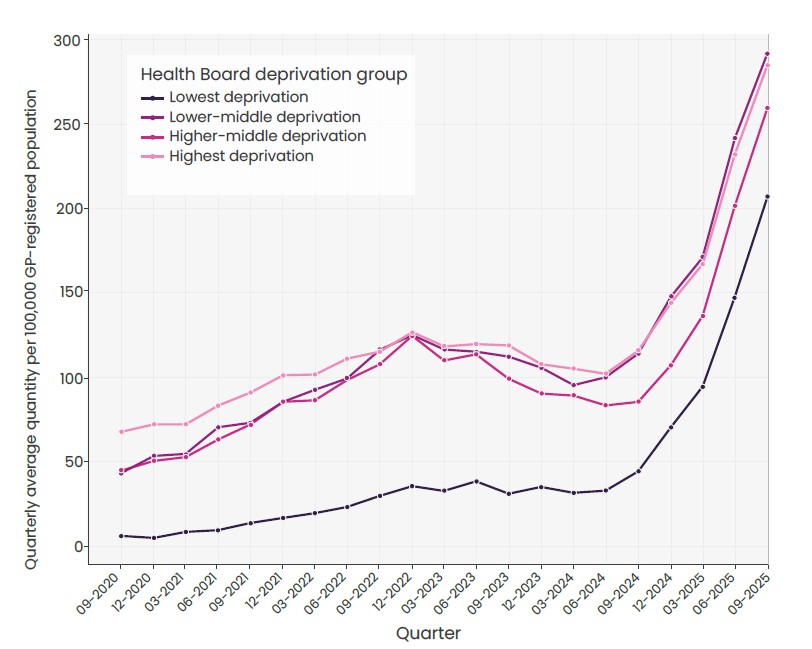
Prescribing increased across all NHS board deprivation groups, with a particularly rapid rise from late 2024 onwards (Figure 1E). NHS boards were grouped by the proportion of their population living in data zones within the most deprived 20 per cent nationally.7 Boards in the highest deprivation group generally had the highest prescribing rates, including after the most recent SMC acceptance. This is a positive finding and broadly aligns with the higher prevalence of type 2 diabetes and obesity in more deprived populations.8,9 The higher adoption observed in the most deprived NHS board group may reflect more prescribing in populations with greater underlying clinical need, although it may also partly reflect greater use of private prescribing of these medicine classes in less deprived NHS boards. This analysis should be interpreted as variation in NHS prescribing of the combined medicine class, rather than as evidence of equitable access to pharmacological obesity treatment specifically.
Overall, the findings show strong growth in NHS prescribing of GLP-1 and GIP/GLP-1 therapies, alongside substantial geographical variation. Patient pathways, specialist capacity, referral criteria and prescriber confidence are likely to be important in translating national advice into routine use. Crucially, the findings should not be interpreted as evidence of widespread NHS adoption for obesity: the data are likely to predominantly reflect prescribing for type 2 diabetes, while obesity implementation has been more restricted, phased and locally dependent. Emerging pathways in NHS Lanarkshire and NHS Lothian provide positive examples of progress, but wider and more consistent NHS access for obesity will depend on commissioned pathways, sufficient specialist and primary-care capacity, clear prescribing responsibilities and appropriate funding.
Figure 1A: Quantity per 100,000 GP-registered population of type 2 diabetes and weight management (GLP-1 receptor agonist / GIP/GLP-1 dual receptor agonist) therapies across all prescribing settings in Scotland. The dashed grey line indicates the most recent SMC acceptance date for the medicine class.
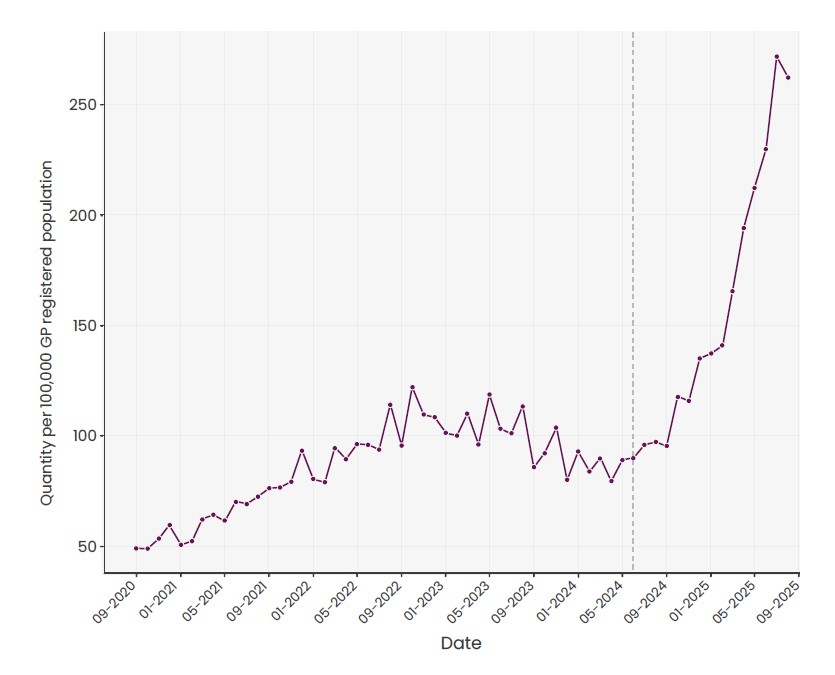
Figure 1B: Quantity per 100,000 GP-registered population of type 2 diabetes and weight management (GLP-1 receptor agonist / GIP/GLP-1 dual receptor agonist) therapies in Scotland, showing the two highest- and lowest-prescribing NHS boards across all prescribing settings. The dashed grey line indicates the most recent SMC acceptance date for the medicine class.
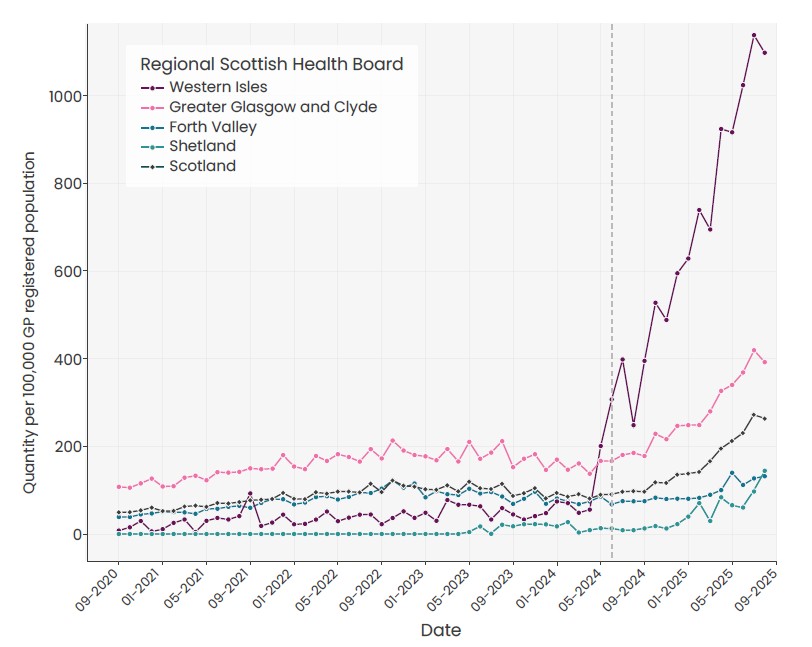
Table 2: Variation across Scottish NHS boards by three-month average quantities per 100,000 GP-registered population for type 2 diabetes and weight management (GLP-1 receptor agonist / GIP/GLP-1 dual receptor agonist) therapies across all prescribing settings.
Scottish NHS board | Three-month average quantity per 100,000 GP-registered population* |
|---|---|
Western Isles | 1,086.54 |
Greater Glasgow and Clyde | 392.97 |
Highland | 356.41 |
Orkney | 310.89 |
Tayside | 300.66 |
Lothian | 256.45 |
Borders | 231.67 |
Lanarkshire | 190.21 |
Dumfries and Galloway | 153.82 |
Grampian | 151.13 |
Ayrshire and Arran | 135.67 |
Fife | 126.49 |
Forth Valley | 123.20 |
Shetland | 100.31 |
*Note: Values represent the three-month average quantity per 100,000 GP-registered population, calculated using data from the final three months of the analytical period (June to August 2025). They describe variation in recorded prescribing activity and should not be interpreted as a measure of NHS board performance, quality of care or patient-level access.
Figure 1C-D: Disease prevalence and prescribing adoption for type 2 diabetes and weight management medicines across Scottish NHS boards. Bubble plots show the latest three-month average quantity per 100,000 GP-registered population for GLP-1 receptor agonist and GIP/GLP-1 dual receptor agonist therapies across all prescribing settings.
Figure 1C shows type 2 diabetes prevalence and prescribing adoption, while Figure 1D shows overweight and obesity prevalence and prescribing adoption. Each bubble represents a Scottish NHS board; bubble size shows the estimated number of people with the relevant condition, and bubble colour shows the relative difference in prescribing adoption compared with the Scotland average. Dashed lines show the median prevalence and median latest prescribing rate across NHS boards. The y-axis is shown on a log scale.
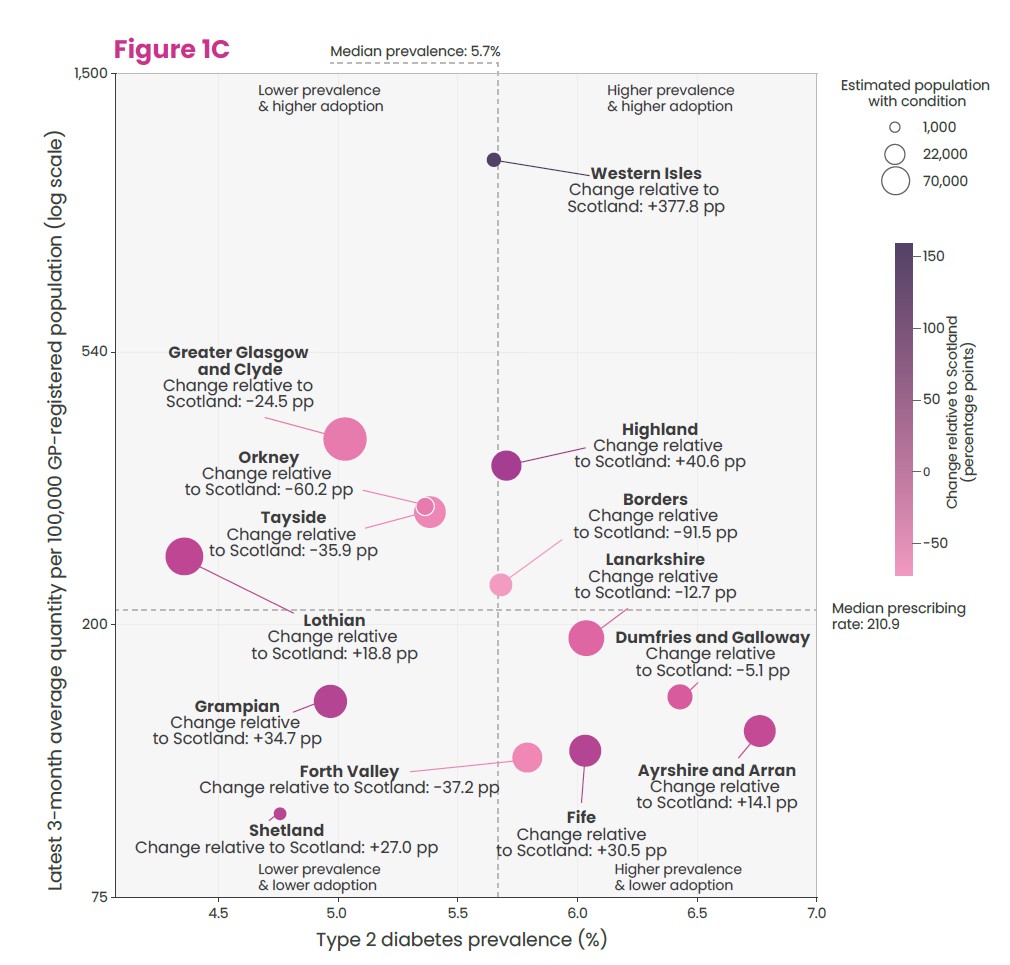
Note: Bubble colour shows the change in prescribing adoption relative to the Scotland average between September 2020 and August 2025. Positive values indicate that adoption increased relative to Scotland, while negative values indicate that adoption declined relative to Scotland. Values are shown in percentage points.
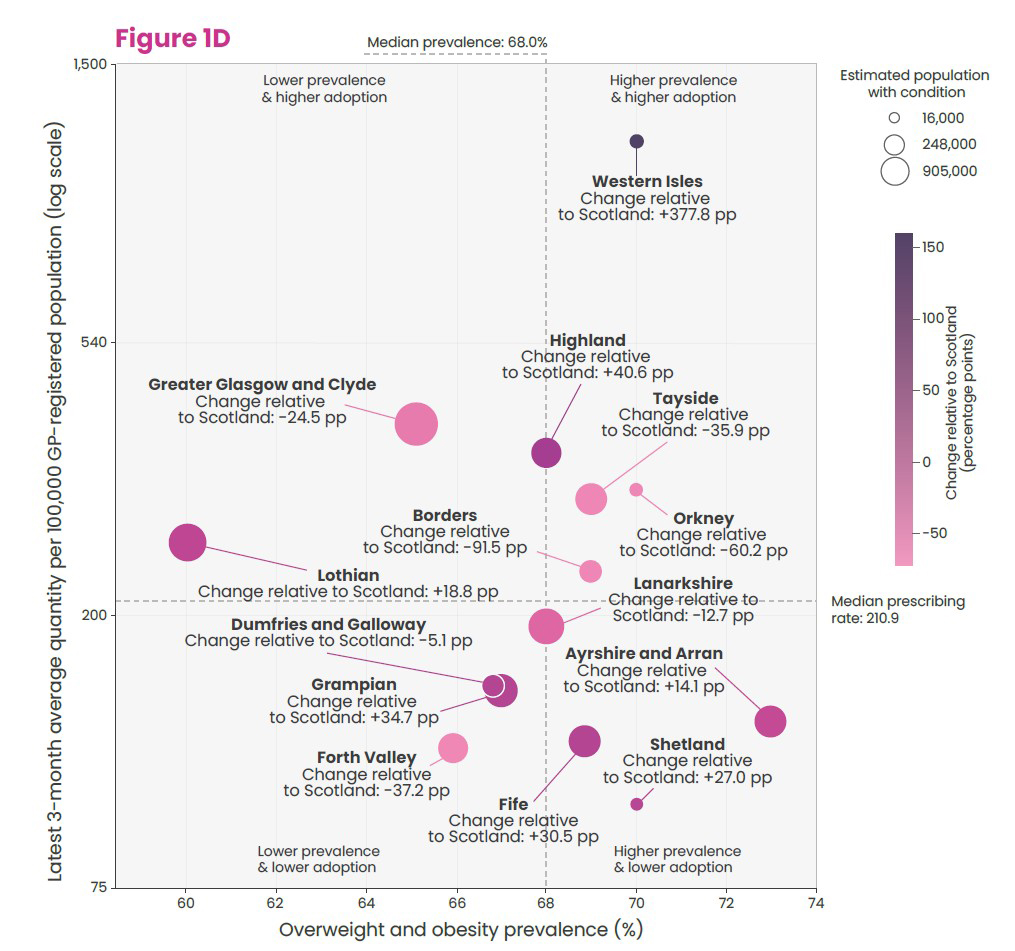
Note: Bubble colour shows how each NHS board’s prescribing adoption changed relative to the Scotland average between September 2020 and August 2025. Positive values indicate that adoption increased relative to Scotland, while negative values indicate that adoption declined relative to Scotland. Values are shown in percentage points.
Figure 1E: Prescribing adoption by NHS board deprivation group for type 2 diabetes and weight management medicines. Quarterly average prescribing rates are shown for GLP-1 receptor agonist and GIP/GLP-1 dual receptor agonist therapies across all prescribing settings, expressed as quantity per 100,000 GP-registered population.
2. LDL-lowering (non-statin) therapies
Cardiovascular disease (CVD) remains a major public health challenge in Scotland and is closely associated with dyslipidaemia. In 2024, an estimated 16 per cent of adults reported living with some form of CVD, with prevalence increasing from around 3 per cent among those aged 16–24 to more than 40 per cent among those aged 75 and over.8 CVD, including coronary heart disease and stroke, also remains a leading cause of morbidity and mortality. Premature mortality from CVD increased by 12 per cent between 2019 and 2021, when it accounted for 22 per cent of all premature deaths in Scotland, reversing earlier improvements in cardiovascular outcomes.21,22 This continuing burden highlights the importance of effective lipid-lowering strategies for people at elevated cardiovascular risk.
The analysis examined non-statin low-density lipoprotein (LDL)-lowering medicines accepted by the SMC for people with hypercholesterolaemia or mixed dyslipidaemia who are unable to achieve LDL-cholesterol targets with maximally tolerated statins or who are statin-intolerant.23–25 These medicines have an important role in secondary prevention and cardiovascular risk reduction among high-risk patients.
Insights shared by ABPI member companies indicate that variation in lipid-lowering prescribing across Scotland is influenced by service configuration and policy incentives. Lipid clinics are largely concentrated in secondary care, where limited capacity can restrict patient access, while greater provision of lipid optimisation services in primary care could support improved adoption. In contrast to England, Scotland does not currently have financial incentives such as the Quality and Outcomes Framework (QOF) to support lipid optimisation in primary care, and there is no equivalent to publicly available datasets, such as CVDPREVENT, that track atherosclerotic cardiovascular disease incidence and treatment to target.
Adoption appears to be influenced by how lipid services and treatment-initiation pathways are organised. Specialist lipid clinics are generally concentrated in secondary care and are often delivered by small teams led by chemical pathologists or cardiologists. These services can provide targeted expertise, but limited capacity and geographic coverage may restrict access. For example, NHS Highland operates a single lipid clinic serving a large rural population; despite high per-capita adoption, access may be concentrated among patients living closer to the clinic, reflecting the challenges of delivering specialist services across a geographically dispersed population.26
Local prescribing pathways also shape access, although initiation and supply arrangements differ between medicines within the class. For injectable non-statin LDL-lowering therapies, specialist lipid services generally retain an important role in assessing eligibility, recommending or initiating treatment and providing ongoing clinical oversight. In NHS Greater Glasgow and Clyde, for example, published guidance indicates that treatment with certain medicines within this class should be commenced on the advice of a lipid specialist; GPs may subsequently issue prescriptions, while monitoring and treatment adjustments remain with the specialist service.27 Other NHS boards retain more explicitly specialist-led models. NHS Dumfries and Galloway lists several injectable therapies within this class for specialist initiation,28 while NHS Highland restricts certain medicines within the class to specialist or hospital use for eligible patients under the lipid clinic.29 NHS Highland also identifies homecare as a preferred supply route for some therapies within the class.29 These differences highlight how access to specialist assessment, referral processes and arrangements for ongoing prescribing or homecare may influence adoption.26,27,29
Despite these differences in initiation pathways, GP practices accounted for more than 99 per cent of recorded prescribing volume across the combined medicine class. This reflects the substantial role of primary care in ongoing lipid-lowering treatment but should not be interpreted as evidence that all medicines within the class can be initiated in primary care. Some injectable therapies remain specialist-led and may be supplied through hospital or homecare arrangements.
Across the study period, population-standardised prescribing activity for non-statin LDL-lowering medicines increased by approximately 2,733 per cent, rising from 18 per 100,000 GP-registered population in December 2021 to 510 per 100,000 GP-registered population in August 2025. Substantial variation in per-capita prescribing was observed across NHS boards (Figures 2A and 2B; Table 3). Several western NHS boards showed faster growth, including Highland and Dumfries and Galloway, while adoption was more gradual in some eastern and central NHS boards, including Lothian, Fife, Forth Valley and Tayside. By the final three months, prescribing rates differed eight- to 10-fold between the highest-prescribing western boards and the lowest-prescribing eastern boards.
The findings suggest that clear treatment pathways, timely access to specialist assessment and effective links between specialist and primary care services may support adoption. NHS boards with more accessible pathways generally recorded higher prescribing activity; however, the medicines included in this class have different initiation and supply arrangements, and the analysis does not adjust for clinical need, case mix, service capacity or other local factors. The observed association should therefore not be interpreted as evidence that any particular prescribing model caused higher adoption.
Figure 2A: Quantity per 100,000 GP-registered population of LDL-lowering (non-statin) therapies in Scotland, showing the two highest- and lowest-prescribing NHS boards across all prescribing settings. The dashed grey line indicates the most recent SMC acceptance date for the medicine class.
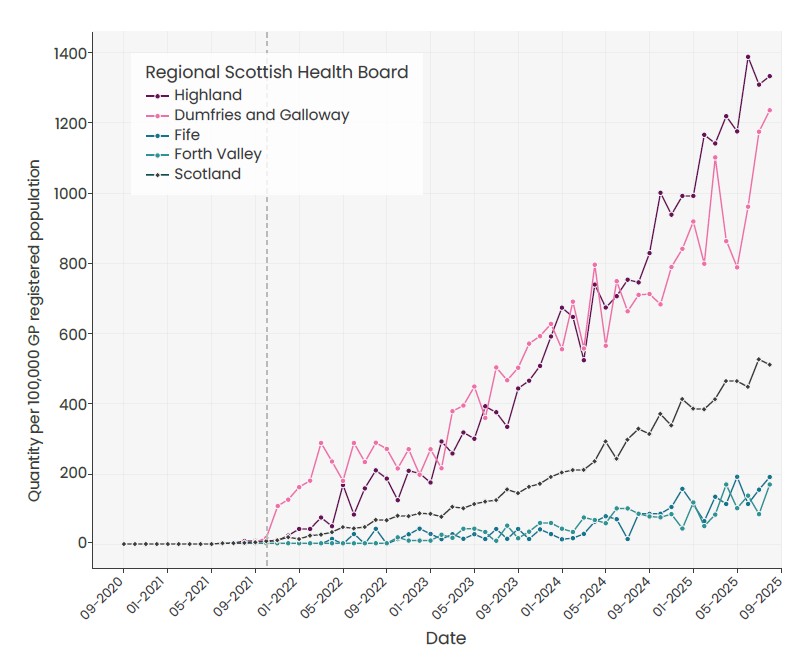
Table 3: Variation across Scottish NHS boards by three-month average quantities per 100,000 GP-registered population for LDL-lowering (non-statin) therapies across all prescribing settings.
Scottish NHS board | Three-month average quantity per 100,000 GP-registered population* |
|---|---|
Highland | 1,342.08 |
Dumfries and Galloway | 1,122.57 |
Lanarkshire | 872.65 |
Grampian | 625.88 |
Western Isles | 551.90 |
Greater Glasgow and Clyde | 498.79 |
Ayrshire and Arran | 389.87 |
Shetland | 366.36 |
Borders | 339.82 |
Orkney | 334.82 |
Tayside | 286.31 |
Lothian | 177.26 |
Fife | 153.17 |
Forth Valley | 130.16 |
*Note: Values represent the three-month average quantity per 100,000 GP-registered population, calculated using data from the final three months of the analytical period (June to August 2025). They describe variation in recorded prescribing activity and should not be interpreted as a measure of NHS board performance, quality of care or patient-level access.
Figure 2B: Per-capita prescribing of LDL-lowering (non-statin) therapies per 100,000 GP-registered population across Scottish NHS boards at three, 12, and 36 months following the most recent SMC acceptance within this medicine class across all prescribing settings.
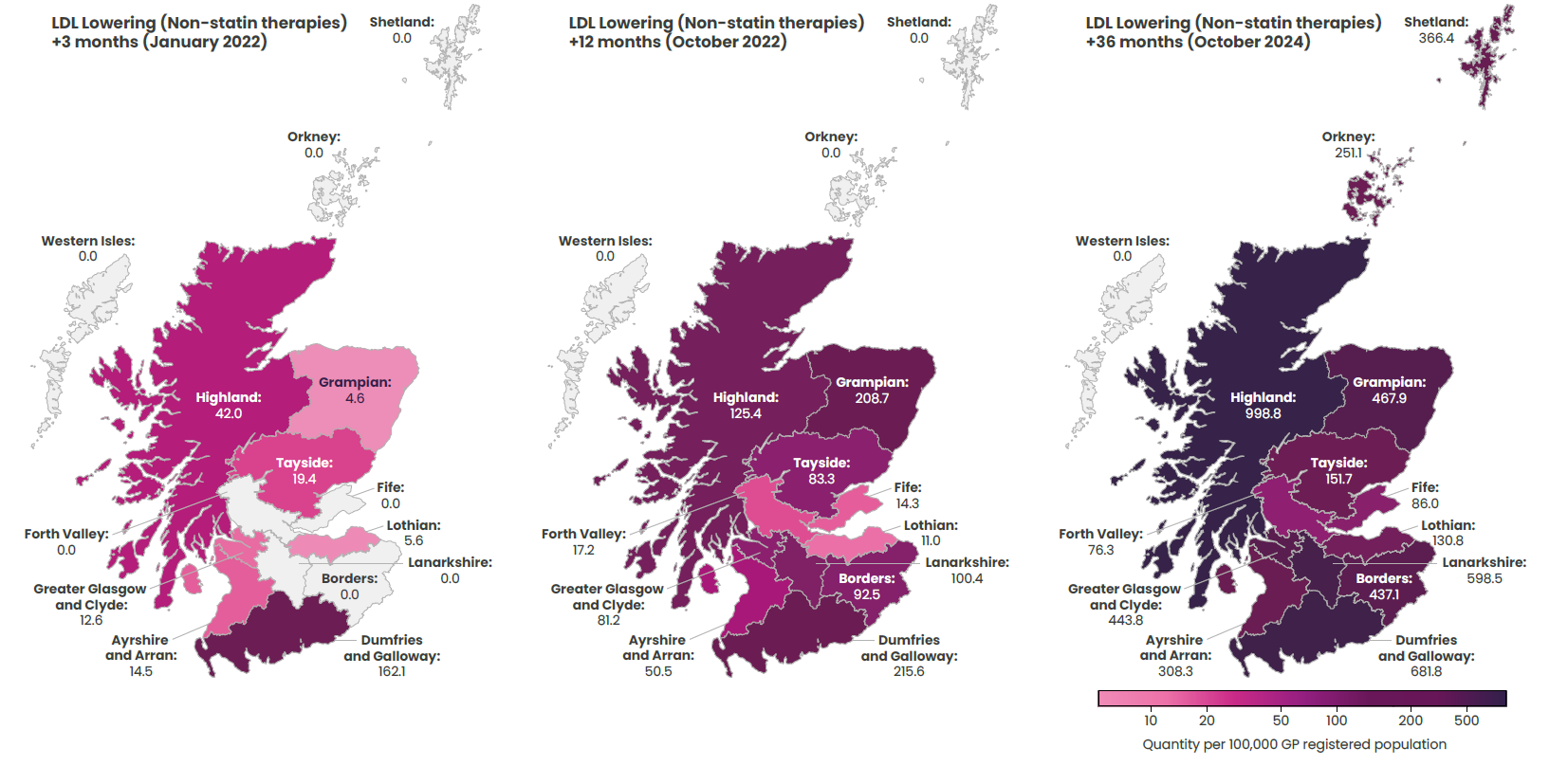
Note: Maps show prescribing activity at a single month for each time point. Prescribing rates may therefore be sensitive to short-term fluctuations, particularly for low-volume medicines and in NHS boards with smaller populations, where small changes in absolute quantities can produce substantial changes in per-capita rates. The maps should be interpreted as snapshots of recorded prescribing activity rather than as evidence of sustained differences in adoption between NHS boards.
3. Non-small cell lung cancer (ALK inhibitors)
Lung cancer is one of the most commonly diagnosed cancers in Scotland.30 In 2022, there were 4,851 new diagnoses, with non-small cell lung cancer (NSCLC) accounting for approximately 80–85 per cent of cases. Outcomes remain poor: one-year age-standardised net survival has been estimated at 36.7 per cent for men and 44.9 per cent for women.30,31 Incidence is also strongly associated with socioeconomic deprivation and is approximately three times higher in the most deprived areas than in the least deprived.30,32
The current analysis examined medicines indicated for a subtype of NSCLC characterised by alterations in the anaplastic lymphoma kinase (ALK) gene, referred to as ALK inhibitors.33,34 The medicines included in this class have SMC-accepted indications spanning both first-line and later-line treatment of ALK-positive advanced NSCLC.33,34
Total prescribing of the analysed non-small cell lung cancer (ALK inhibitor) medicines remained low and relatively stable between September 2020 and mid-2023, fluctuating between five and 15 per 100,000 GP-registered population. From mid-2023 onwards, prescribing increased gradually, reaching approximately 55 per 100,000 GP-registered population by July 2025. This trend was characterised by notable month-on-month variability (Figure 3A). The comparatively slow and incremental increase should be interpreted in the context of a small eligible patient population and the position of these medicines within specialist treatment pathways, rather than as evidence of delayed implementation.
All prescribing within this medicine class was recorded in secondary care, reflecting the specialist nature of treatment and the need for molecular diagnostic testing to confirm ALK-positive disease before initiation. Adoption therefore depends on coordinated access to pathology, molecular testing, specialist oncology expertise and appropriate treatment pathways.
Geographic variation in prescribing reflects the centralised delivery of specialist oncology services and genomic testing. In Scotland, molecular testing for ALK-positive lung cancer is delivered through regional laboratories in Aberdeen, Dundee, Edinburgh and Glasgow.35 More rural and remote Scottish NHS boards, including Borders, Shetland, Orkney, the Western Isles, and Dumfries and Galloway, recorded lower or no prescribing activity in the available data (Figure 3B). This is likely to reflect the centralised organisation of specialist treatment and the attribution of hospital activity to the provider board, rather than necessarily indicating lower access for patients who reside in these areas.
Figure 3A: Quantity per 100,000 GP-registered population of NSCLC (ALK inhibitor) therapies prescribed in hospital settings in Scotland. The dashed grey line indicates the most recent SMC acceptance date for the medicine class.
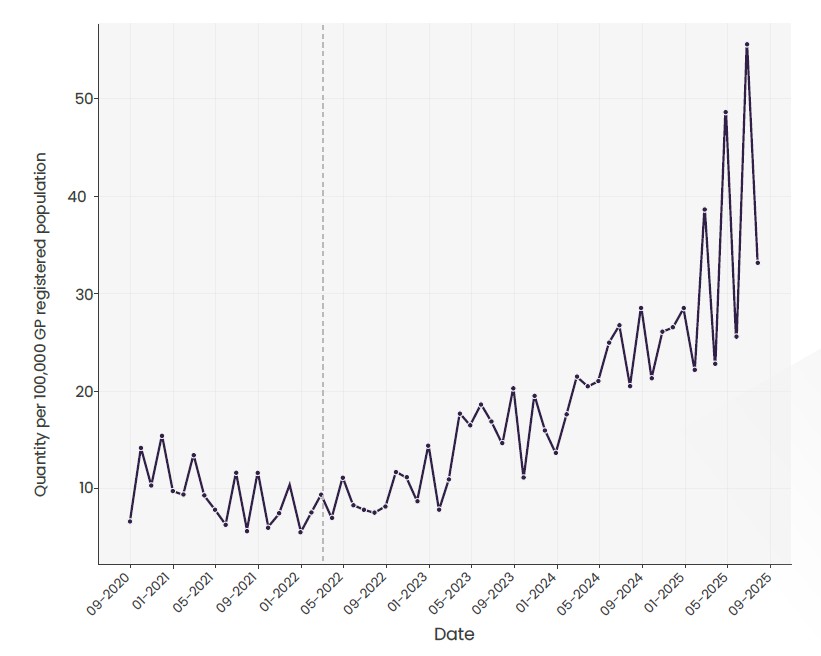
Figure 3B: Per-capita prescribing of NSCLC (ALK inhibitor) therapies per 100,000 GP-registered population across Scottish NHS boards at three, 12, and 36 months following the most recent SMC acceptance within this medicine class, in hospital prescribing settings.
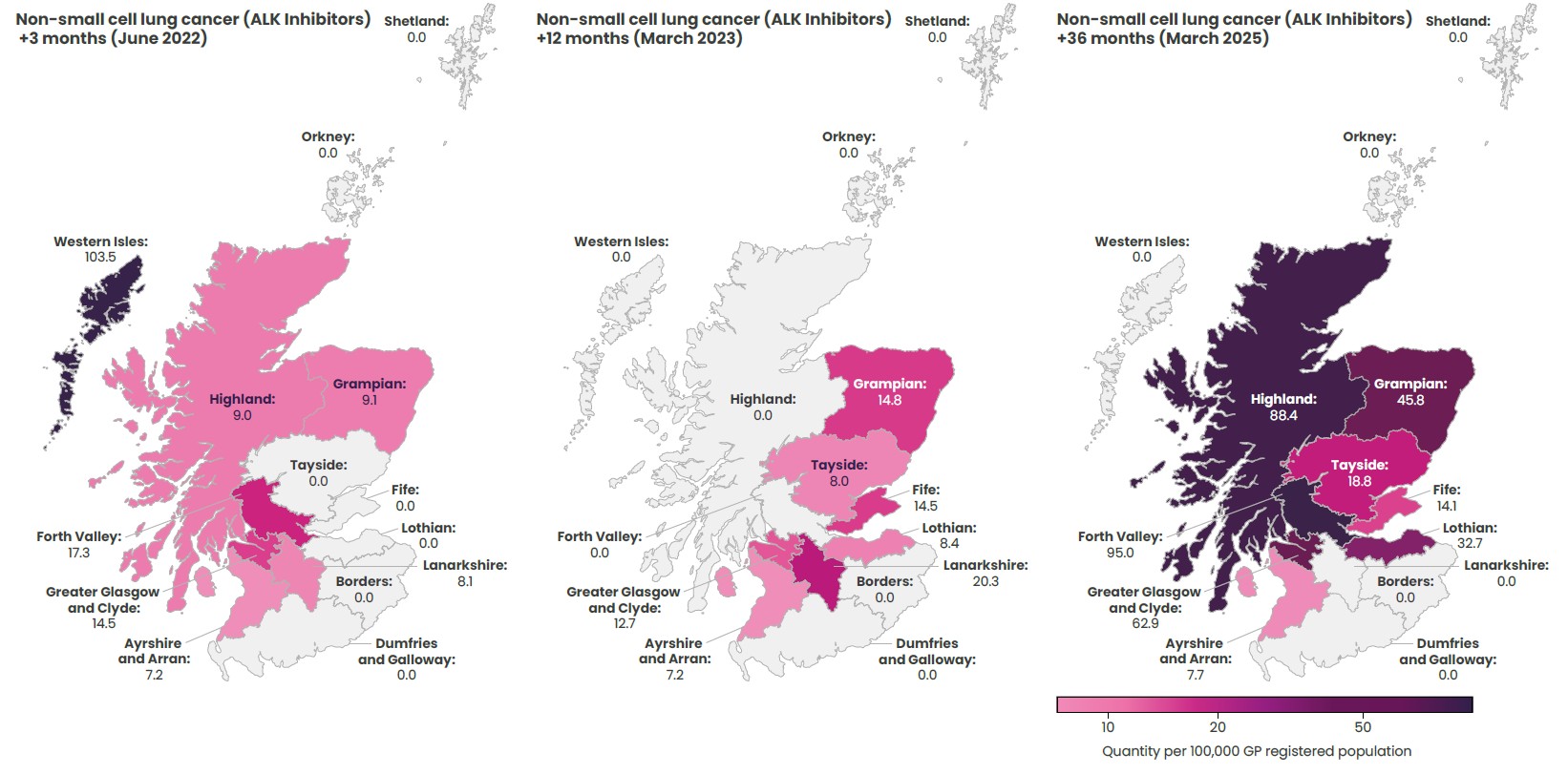
Note: Maps show prescribing activity at a single month for each time point. Prescribing rates may therefore be sensitive to short-term fluctuations, particularly for low-volume medicines and in NHS boards with smaller populations, where small changes in absolute quantities can produce substantial changes in per-capita rates. The maps should be interpreted as snapshots of recorded prescribing activity rather than as evidence of sustained differences in adoption between NHS boards.
4. Migraine prevention (CGRP pathway attenuator)
Migraine is a common neurological condition characterised by recurrent headache attacks that can last for several hours to several days, often accompanied by nausea, vomiting and sensitivity to light, sound or smells.36 Migraine can substantially impair quality of life and is one of the main contributors to years lived with disability globally.36–39 Despite this substantial burden, migraine remains under-recognised, and preventive treatments are often underused or not optimised prior to referral to specialist care.37–39 In Scotland, migraine accounts for approximately 94 per cent of headache-related consultations in primary care.37–39
The migraine prevention (calcitonin gene related peptide [CGRP] pathway attenuator) medicine class assessed in the current analysis includes medicines that are indicated for the prevention of chronic or episodic migraine in adults who have an inadequate response to, or intolerance of, multiple conventional preventive treatments.40,41 These therapies are typically initiated within specialist care in line with SMC advice.
Across the study period, per-capita prescribing of the migraine prevention (CGRP pathway attenuator) therapies analysed increased from approximately 3.5 per 100,000 GP-registered population in September 2020 to a peak of around 11 per 100,000 GP-registered population in early 2025, before declining to 7.5 per 100,000 GP-registered population by August 2025. The introduction of the National Headache Pathway in Scotland in 2023, which was designed to improve recognition, diagnosis and management of migraine across care settings, may have contributed to increased adoption of medicines during this period.39 It is unclear whether the decline in prescribing observed in 2025 represents a sustained change or simply reflects the considerable month-to-month variability in prescribing (Figure 4A).
Prescribing within this medicine class occurred almost exclusively in secondary care, with fewer than 1 per cent of prescriptions originating from GP practices, reflecting the specialist positioning of these therapies and their use in patients with refractory disease following failure of other preventive treatments.
Substantial regional variation was observed (Figure 4B). Lower recorded prescribing activity in some NHS boards, including Dumfries and Galloway, may be consistent with differences in specialist capacity, outpatient demand, referral patterns or the timing of local implementation. The available data cannot determine which factors were responsible. NHS Borders provides a contrasting example: after little or no prescribing during the first 12 months following SMC acceptance, it recorded the highest per-capita prescribing rate at 24 months (Figure 4B). This is consistent with adoption accelerating once local pathways and formulary arrangements were established; however, the data cannot distinguish these effects from clinician expertise, patient case mix or other local factors. Taken together, the results point to the importance of clear referral criteria, sufficient specialist capacity and consistent implementation of the National Headache Pathway. Sharing approaches from NHS boards that achieved faster adoption could support more timely and equitable access across Scotland
Figure 4A: Quantity per 100,000 GP-registered population of migraine prevention (CGRP pathway attenuator) therapies in Scotland across all prescribing settings. The dashed grey line indicates the most recent SMC acceptance date for the medicine class.
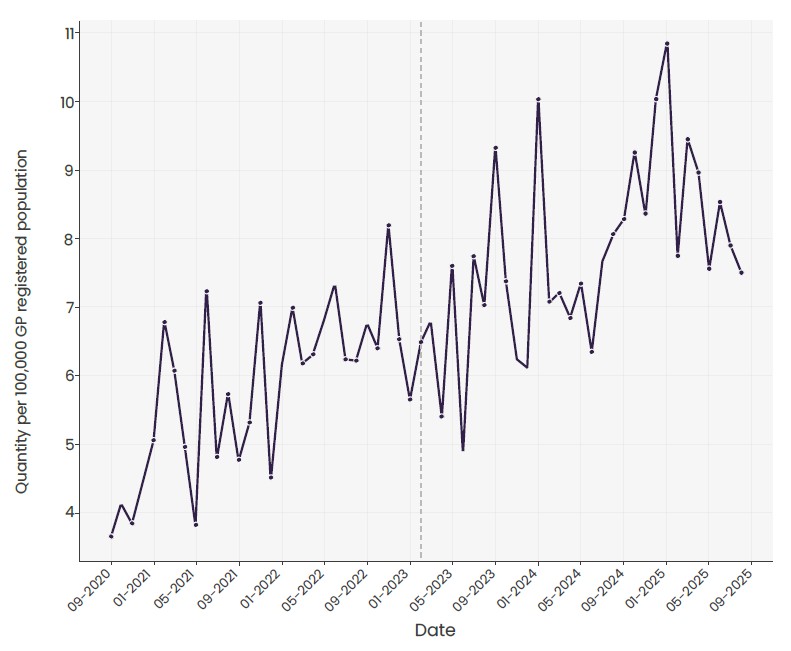
Figure 4B: Per-capita prescribing of migraine prevention (CGRP pathway attenuator) therapies per 100,000 GP-registered population across Scottish NHS boards at three, 12, and 24 months following the most recent SMC acceptance within this medicine class, across all prescribing settings.
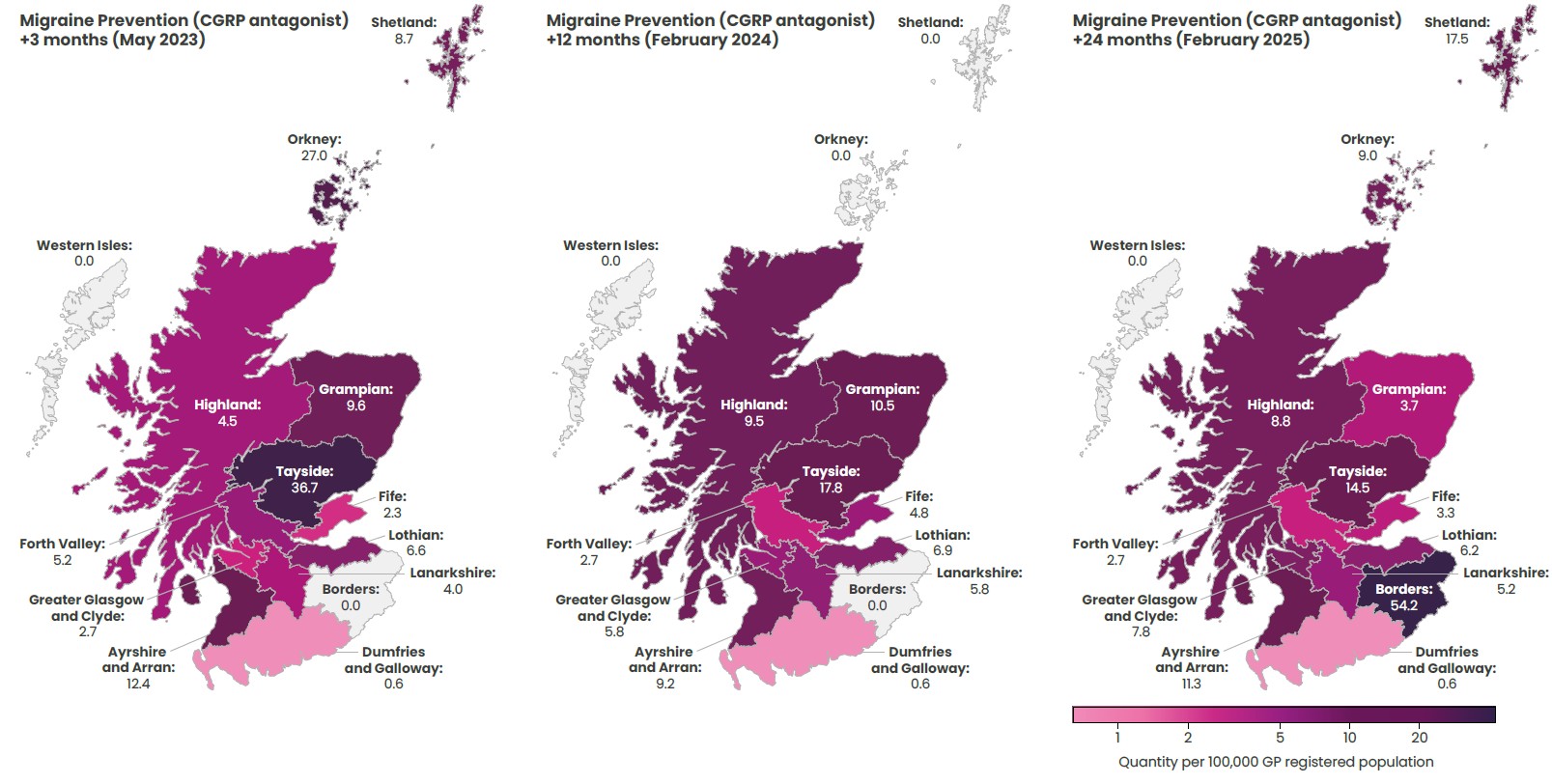
Note: Maps show prescribing activity at a single month for each time point. Prescribing rates may therefore be sensitive to short-term fluctuations, particularly for low-volume medicines and in NHS boards with smaller populations, where small changes in absolute quantities can produce substantial changes in per-capita rates. The maps should be interpreted as snapshots of recorded prescribing activity rather than as evidence of sustained differences in adoption between NHS boards.
5. Orphan medicine (cardiac myosin inhibitor)
Hypertrophic cardiomyopathy (HCM) is an inherited heart condition that causes abnormal thickening of the heart muscle, making it harder for the heart to pump blood effectively.42,43 It affects around one in 500 people, although many cases remain undiagnosed.43,44 A subtype of this condition, obstructive hypertrophic cardiomyopathy (oHCM), occurs when thickening of the interventricular septum obstructs blood flow from the left ventricle.42,43 Patients with symptomatic oHCM may experience shortness of breath, chest pain, palpitations or loss of consciousness, and the condition carries an increased risk of heart failure and sudden cardiac death.45
The cardiac myosin inhibitor orphan medicine class assessed in the current analysis comprises a therapy indicated for the treatment of adults with oHCM. Historically, treatment options for patients with oHCM were limited to symptom-modifying medicines such as beta blockers or calcium channel blockers, or invasive interventions.46 Unlike older treatments, the cardiac myosin inhibitor included in this analysis reduces excessive contraction of the heart muscle, helping to ease the obstruction to blood flow from the heart and improve how the heart fills.45,46
In Scotland, treatment with a cardiac myosin inhibitor should be initiated under the supervision of a clinician experienced in managing cardiomyopathy. Before treatment begins, left ventricular ejection fraction should be assessed by echocardiography, with further monitoring undertaken at the intervals specified in the product information. CYP2C19 genotyping is used to guide dosing; this is distinct from genetic testing undertaken as part of the wider diagnosis and family assessment of hypertrophic cardiomyopathy. The availability of CYP2C19 genotyping and local echocardiography capacity may therefore influence the pace of implementation across NHS boards.47,48
ABPI member company insight suggests that disease-modifying therapies for rare cardiovascular conditions can support NHS service transformation by enabling earlier intervention and sustained management within community pathways. Evidence indicates that these treatments may reduce the need for invasive procedures and hospital admissions in some patients, helping to relieve pressure on acute services while supporting care closer to home.44 This approach aligns with wider NHS priorities to develop community-based specialist services and support more sustainable use of NHS resources.
Following SMC acceptance in April 2024, prescribing remained low, at approximately 0.025 per 2,000 GP-registered population, until September 2024. Recorded prescribing activity then increased rapidly, by more than 1,200 per cent to around 0.34 per 2,000 GP-registered population by August 2025 (Figure 5A). The initially low recorded quantities are compatible with a period of service preparation, but they may also reflect the very small eligible population, irregular treatment and dispensing patterns, and the location at which specialised treatment was recorded. The subsequent rapid increase is a positive indication that services across Scotland were able to translate SMC acceptance into clinical use once the necessary pathways and monitoring arrangements were in place.
Variation between NHS boards remained substantial, with several boards recording no prescribing in individual months or across the study period (Figure 5B). This may partly reflect the rarity of oHCM, the distribution of eligible patients and the concentration of specialist cardiology services. As an inherited condition, familial clustering may also contribute to local variation in the number of people eligible for treatment. Lothian and Greater Glasgow and Clyde, which have established specialist cardiology expertise, recorded sustained prescribing from late 2024. Shetland also recorded early activity despite its remote geography, suggesting that geography alone need not prevent adoption where appropriate diagnostic, referral and monitoring arrangements are in place. However, prescribing location does not necessarily reflect patient residence, particularly for specialised services. Routine monitoring by both patient residence and treatment location would therefore help NHS Scotland assess whether observed variation reflects appropriate regional delivery or potential inequalities in adoption, reinforcing the recommendation set out earlier in this report.
The rapid increase in prescribing from September 2024 is an encouraging indication that the necessary diagnostic, referral and specialist treatment pathways may have become more established. Conversely, the initial period of low prescribing following SMC acceptance may indicate a period in which service-readiness requirements were still being addressed, although the small eligible population is also likely to have contributed. Where implementation delays are attributable to service readiness, they also delay the point at which clinically eligible patients can benefit from treatment. The pattern therefore illustrates the importance of anticipating requirements such as CYP2C19 genotyping,47,48 echocardiographic monitoring, specialist capacity and referral pathways before or alongside SMC acceptance. Although the aggregate data cannot determine individual eligibility, clinical outcomes or the causes of variation, they provide a useful signal for identifying where implementation should be examined further and where effective approaches could be shared across NHS Scotland.
Figure 5A: Quantity per 2,000 GP-registered population of a cardiac myosin inhibitor orphan medicine therapy prescribed in hospital settings in Scotland. The dashed grey line indicates the most recent SMC acceptance date for the medicine class.
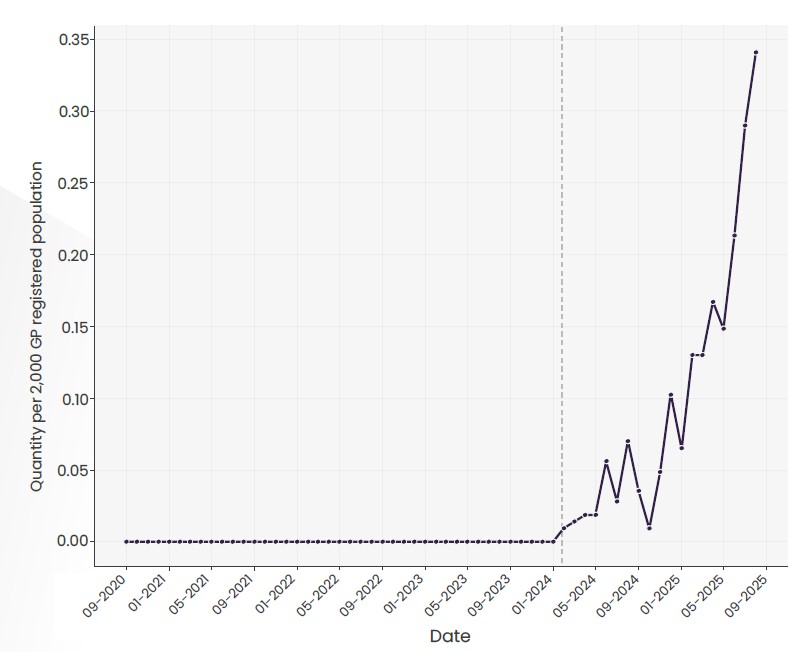
Figure 5B: Per-capita prescribing of a cardiac myosin inhibitor orphan medicine therapy per 2,000 GP-registered population across Scottish NHS boards at three, 6, and 15 months following SMC acceptance in hospital settings.
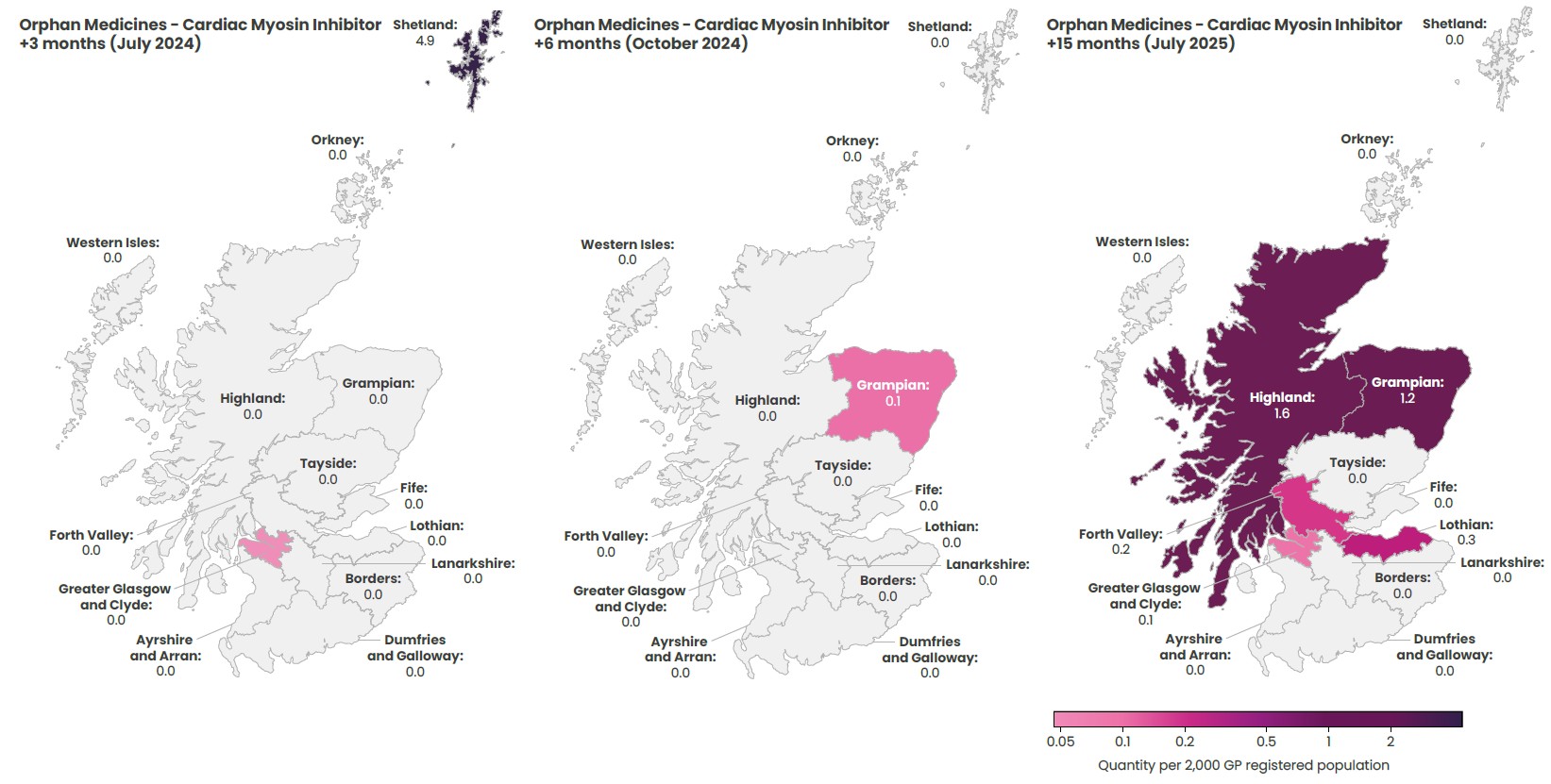
Note: Maps show prescribing activity at a single month for each time point. Prescribing rates may therefore be sensitive to short-term fluctuations, particularly for low-volume medicines and in NHS boards with smaller populations, where small changes in absolute quantities can produce substantial changes in per-capita rates. The maps should be interpreted as snapshots of recorded prescribing activity rather than as evidence of sustained differences in adoption between NHS boards.
Conclusion
Scotland has a well-established approach to assessing new medicines through the SMC. The opportunity now is to ensure that SMC acceptance translates more consistently into timely adoption and meaningful patient benefit across NHS Scotland. The variation identified in this analysis does not in itself demonstrate a lack of appropriate access to treatments, but highlights where differences in service readiness, diagnostics, workforce, referral pathways, formulary implementation or local resources may warrant further investigation. When these factors create avoidable delays, clinically eligible patients may wait longer to benefit from medicines already assessed as clinically effective and cost-effective.
Improving adoption can therefore have direct benefits for patients. More timely implementation can enable earlier treatment, prevention or slowing of disease progression, fewer complications and, for some patients, reduced need for hospital care or more invasive interventions. This is particularly important as medicines become increasingly specialised, personalised and dependent on genomic testing or complex referral pathways. Where a patient lives should not determine how quickly they can benefit from an SMC-accepted medicine; monitoring specialised medicines by patient residence as well as treatment location will be important in understanding whether national decisions are translating into equitable benefit across Scotland.
Scotland already has many of the mechanisms needed to strengthen implementation, including UK PharmaScan, the SMC Forward Look, the HSAB, regional formulary collaboration and established approaches to partnership working. This approach aligns with the ‘Population Health Framework 2025–2035’, the ‘NHS Scotland Operational Improvement Plan 2025–26’ and the ‘Health and Social Care Service Renewal Framework’. The priority is to connect these mechanisms more effectively so that implementation is considered alongside assessment rather than after it. The recommendations in this report provide a practical route to achieve this through earlier and nationally coordinated service-readiness planning, greater transparency around formulary and implementation decisions, proportionate assurance for complex medicines, evaluation of whether planning through the HSAB translates into adoption, improved monitoring of specialised medicines, collaborative implementation and appropriate financial readiness.
Delivering these changes will require clear ownership across the system. The Scottish Government has an important role in national policy, accountability, transparency and funding; the NHS Scotland Board Chief Executive Group can provide leadership on service readiness and implementation oversight; and NHS boards and regional structures remain central to formulary implementation, pathway development and workforce planning. The refreshed ‘Common Understanding’ and the triple helix approach provide a framework through which NHS Scotland, the Scottish Government, academia and industry can work together appropriately and transparently.2 Within this framework, industry can act as an effective implementation partner by contributing to horizon scanning, service planning, pathway development, evidence generation and the sharing of practical implementation experience, while preserving the independence of appraisal and clinical decision-making.
The central challenge is therefore no longer only to determine which innovative medicines represent value for NHS Scotland, but to ensure that national assessment translates into consistent local action. National decisions should deliver national benefit. By reducing avoidable variation in adoption, Scotland has an opportunity to improve outcomes for clinically eligible patients, support more equitable care and realise more of the health and system value of its investment in medicines.
Next steps
The quantitative analysis in this report identifies where patterns of adoption differ but cannot determine on its own why particular approaches have been successful. As a next step, complementary ABPI member case studies will explore examples of relatively strong adoption in greater depth, examining the practical factors that enabled implementation, including leadership, service redesign, pathway development, workforce planning, service readiness and partnership working. These qualitative insights will help identify which approaches may be transferable across NHS Scotland and provide practical examples of how the recommendations in this report could be delivered.
Together, the analysis and case studies are intended to support a shift from identifying variation to understanding and replicating effective implementation. The goal is that every clinically eligible patient in Scotland has a fair opportunity to benefit from an SMC-accepted medicine in a timely and equitable way, while NHS Scotland is better able to realise the wider patient, service and system benefits of innovation.
References
Scottish Government. Guidance to Further Strengthen the Safe and Effective Use of New Medicines Across the NHS in Scotland, 2012.
Scottish Government. A Common Understanding 2025: Working Together for the People of Scotland, 2025.
Introduction and Availability of Newly Licensed Medicines in the NHS in Scotland; Chief Executive Letter CEL 17 (2010); 2010.
Public Health Scotland. Hospital Medicines Utilisation Database (HMUD), 2024.
Public Health Scotland. Prescriptions in the Community, 2025.
Public Health Scotland. GP Practice Populations, 2019.
The Scottish Government. Scottish Index of Multiple Deprivation 2020, 2020.
The Scottish Government. Scottish Health Survey 2024, 2025.
Scottish Diabetes Group. Scottish Diabetes Survey 2024, 2025.
Scottish Government. Proposed National Good Food Nation Plan, 2025.
Scottish Medicines Consortium. Semaglutide (Ozempic) - SMC2092, 2019.
Scottish Medicines Consortium. Tirzepatide (Mounjaro) - SMC2633, 2024.
Scottish Medicines Consortium. Tirzepatide (Mounjaro) - SMC2653, 2024.
Scottish Medicines Consortium. Semaglutide (Wegovy) - SMC2497, 2023.
Scottish Government. Quality Prescribing Strategy for Type 2 Diabetes Mellitus: A Guide for Improvement 2024–2027; 2024.
Scottish Government. Consensus Statement: National Criteria for the Prioritisation of Glucagon-like Peptide-1 Receptor Agonists (GLP-1 RAs) and GLP-1 RA/Glucose-Dependent Insulinotropic Polypeptide (GIP RAs) for the Treatment of Obesity in NHS Scotland; 2024.
Scottish Government. Public Attitudes to Cost of Living and Other Topics: Tracker – Data Tables, 2025.
Martin Fox. Private Pathways, Dr ChatGPT and the Biosimilar Boom – Three Topics That Executives in UK Life Sciences Organisations Can’t Avoid in 2026, 2025.
Howat, Isabel. Tirzepatide (Mounjaro®) as an Adjunct to Lifestyle Measures in Weight Management, 2025.
East Lothian Integration Joint Board. Obesity Medicines Specialist Pathway; 2026.
British Heart Foundation. The CVD Challenge in Scotland, 2018.
Public Health Scotland. Scottish Heart Disease Statistics: Year Ending 31 March 2023, 2024.
Scottish Medicines Consortium. Inclisiran (Leqvio) – SMC2358, 2021.
Scottish Medicines Consortium. Bempedoic Acid (Nilemdo) – SMC2363, 2021.
Scottish Medicines Consortium. Bempedoic Acid / Ezetimibe (Nustendi) – SMC2406, 2021.
NHS Highland. Lipid Lowering Therapy in the Prevention / Treatment of Cardiovascular Disease (Guidelines), 2024.
McGlynn, S. PCSK9 Inhibitors in the Management of Familial Hypercholesterolaemia: Information for Prescribers in Primary Care; Prescribing guidance; NHS Greater Glasgow and Clyde, 2017.
Ciara Wannop; Ewan Bell. Lipid Management Summary, 2024.
NHS Highland. PCSK9 Inhibitors and Modulators (Formulary: Cardiovascular).
Public Health Scotland. Cancer Incidence in Scotland: To December 2023, 2025.
Public Health Scotland. Cancer Survival in Scotland 2013–2017, 2021.
Public Health Scotland. Cancer Staging Data: 2022 Cancer Staging Data, 2023.
Scottish Medicines Consortium. Brigatinib (Alunbrig) - SMC2147.
Scottish Medicines Consortium. Lorlatinib (Lorviqua) - SMC2239, 2020.
Scottish Strategic Network for Genomic Medicine. Genomic Test Directory: Cancer, 2023.
The Migraine Trust. What Is Migraine?, 2026.
The Scottish Government. Neurological Conditions: Estimating the Prevalence in Scotland of Selected Conditions Using GP and Hospital Admissions Datasets, 2022.
Kate Sanger. A New Pathway for Migraine Care in Scotland, 2023.
Centre for Sustainable Delivery. National Headache Pathway: An Overview, 2023.
Scottish Medicines Consortium. Eptinezumab (Vyepti) - SMC2547, 2023.
Scottish Medicines Consortium. Erenumab (Aimovig) - SMC2134, 2019.
Braunwald, E. Hypertrophic Cardiomyopathy. N Engl J Med 2025, 393 (10), 1004–1015.
Lopes, L. R.; Aung, N.; van Duijvenboden, S.; Munroe, P. B.; Elliott, P. M.; Petersen, S. E. Prevalence of Hypertrophic Cardiomyopathy in the UK Biobank Population. JAMA Cardiol 2021, 6 (7), 852–854.
National Institute for Health and Care Excellence (NICE). First Treatment to Target Heart Condition Set to Benefit, 2023.
Geske, J. B.; Ommen, S. R.; Gersh, B. J. Hypertrophic Cardiomyopathy: Clinical Update. JACC Heart Fail 2018, 6 (5), 364–375. https://doi.org/10.1016/j.jchf.2018.02.010
Ommen, S. R.; Ho, C. Y.; Asif, I. M.; Balaji, S.; Burke, M. A.; Day, S. M.; Dearani, J. A.; Epps, K. C.; Evanovich, L.; Ferrari, V. A.; Joglar, J. A.; Khan, S. S.; Kim, J. J.; Kittleson, M. M.; Krittanawong, C.; Martinez, M. W.; Mital, S.; Naidu, S. S.; Saberi, S.; Semsarian, C.; Times, S.; Waldman, C. B. 2024 AHA/ACC/AMSSM/HRS/PACES/SCMR Guideline for the Management of Hypertrophic Cardiomyopathy: A Report of the American Heart Association/American College of Cardiology Joint Committee on Clinical Practice Guidelines. Circulation 2024, 149 (23).
Scottish Medicines Consortium. Mavacamten Hard Capsules (Camzyos®) - SMC2618, 2024.
NHS Tayside. Mavacamten Standard Operating Procedure (SOP) – NHS Tayside, 2026.
-
ThemeDevolved Nations - Scotland
-
KeywordsDevolved Nations - Scotland
-
PublisherABPI
-
Last reviewed date29 October 2026
-
Next review date29 October 2031